|
Dictionaries: Past and Present,
Part 2
Seek and You Will Find!
A book listing words of a language with their meanings in the same or another language; usually in alphabetical order, often with data regarding pronunciation, origin, and usage.
A dictionary is a book that's bound to be used and where one word leads to another.
—Evan Esar, from Esar's Comic Dictionary
A Dictionary of the English Language, 1755
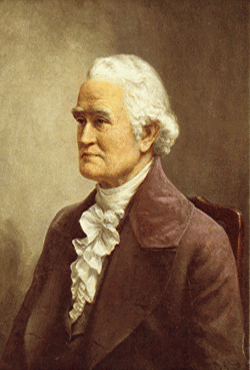
A Dictionary of the English Language, one of the most influential dictionaries in the history of the English language, was prepared by Samuel Johnson and published on April 15 1755.
- The dictionary responded to a widely felt need for stability in the language.
- Calls and proposals for a new dictionary had been made for decades before a group of London booksellers (including Robert Dodsley and Thomas Longman) contracted Johnson in June, 1746 to prepare the work for the sum of å£1575.
- Although he expected to be finished in three years, it took Johnson nearly nine years to complete.
- Remarkably, he did so singlehandedly, with only clerical assistance to copy out the illustrative quotations that he had marked in books. Johnson prepared several revised editions during his life.
Samuel Johnson's preparation for his project
- Johnson's dictionary was prepared at 17 Gough Square, London between the years of 1746 and 1755.
- By 1747, Johnson had written his Plan of a Dictionary of the English Language, which spelled out his intentions and proposed methodology for preparing his document.
- He clearly saw benefit in drawing from previous efforts, and saw the process as a parallel to legal precedent (possibly influenced by Cowell):
I shall therefore, since the rules of stile, like those of law, arise from precedents often repeated, collect the testimonies of both sides, and endeavour to discover and promulgate the decrees of custom, who has so long possessed whether by right or by usurpation, the sovereignty of words.
From Johnson's perspective
- The dictionary has a word list of 42,773 words.
- An important innovation of Johnson's was to illustrate the meanings of his words by literary quotation, of which there are around 114,000.
- The authors most frequently cited by Johnson include Shakespeare, Milton and Dryden. Furthermore, Johnson, unlike Bailey, added notes on a word's usage, rather than being merely descriptive.
- Unlike most modern lexicographers, Johnson introduced humor or prejudice into several of his definitions.
- Among the best known are "Excise: a hateful tax levied upon commodities"; "Lexicographer: a writer of dictionaries, a harmless drudge?"; and "Oats: a grain which in England is generally given to horses, but in Scotland supports the people".
- We all know who said that "no one but a blockhead ever wrote except for money", or that "when a man knows he is going to be hanged it concentrates his mind wonderfully", or that "a woman preaching is like a dog walking on its hind legs".
- Like most other Johnsonisms, these were published by James Boswell after Johnson's death, and we can never be sure how far Boswell's Johnson was Boswell's invention.
- ohnson's etymologies would be considered poor by modern standards, and he gave little guide to pronunciation; one example being "Cough: A convulsion of the lungs, vellicated by some sharp serosity. It is pronounced coff".
- Much of his dictionary was unashamedly prescriptivist, and it was also linguistically conservative, advocating traditional spellings, eg. olde, rather than the simplifications that would be favored later by Noah Webster.
- He "tore the heart out of books", it was said, often returning them to their owners badly mauled.
- To compile the dictionary, he waded through acres of print, marking passages that clarified a word's meaning, then handing them to his little band of "paupers" who copied them out onto thousands of slips.
- When he started out, it appears that he entertained hopes that his dictionary would "fix" the English language and banish errors; but he quickly came to realize that languages live by changing, and he was the first to formulate the modern concept of lexicography as an endlessly evolving record of usage.
- In spite of whatever shortcomings it might have had, the dictionary was far and away the best of its day, a milestone in English-language lexicography to which all modern dictionaries owe some gratitude.
- Johnson's dictionary was still considered authoritative until the appearance of the Oxford English Dictionary at the end of the nineteenth century.
- His was not the first English dictionary, but it instantly eclipsed its rivals and held this position of authority for a century and a half.
Giving colorful titles to dictionaries was the custom for many years
- The Promptorium had a "storehouse", and later, in 1500, came a "garden of words"; for that is the meaning of Ortus Vocabulorum, printed by another of William Caxton's assistants, Wynkyn de Worde.
- Ortus, is a Low Latin form of hortus, "garden".
- In the Ortus, Latin words come first, translated by English.
- The book, like earlier ones, was designed for students of Latin.
Abcedarium Anglico-Latinum pro Tyrunculis, 1552, has been called the first real English dictionary
- It was compiled by Richard Huloet, who was a native of Wisbech in Cambridgeshire, England.
- Pro tyrunculis means "for young beginners of all ages, including adults whose main interest was to learn to read English.
- Latin study, as usual, was probably the goal of this work, but the Latin translation was not given until the English word had been defined in English; therefore, the Abcedarium is regarded as an English dictionary.
- Huloet's style was informal and sometimes humorous, which may be seen in the following defintions:
- Bachiler, or one unmaried, or havying no 'wife, Agamus, mi.
- Black (or blewe) spotte in the face or bodye, made with a stroke, as when a wife hath a blewe eye, she sayth she hath stombled on hir good man his fyste. Suggilatio, onis; Livor, uoris.
- Trymme wenche gorgiously decked, Phalerata foemina.
- Huloet apparently felt that the resplendent young lady needed no further definition in English; and it should be noted that wench, in 1552, was a very proper word; it meant simply "a girl or young woman".
The Abcedarium contained 26,000 words was popular but expensive
- This fact was recognized by a Yorkshire schoolmaster and physician named Peter Levins, who decided to write a smaller work; then, he said, "the price being little, the poorer sorte may be able to bie it."
- Comparing Huloet's big book with his own little one, Levins wrote, "his is for greater students, and them that are richable to have it; this is for beginners and them that are poorable to have no better."
- From that time to this, "richable and poorable" have needed dictionaries, and generations of publishers have tried to serve all of them.
- Levins named his book, published in 1570, Manipulus Vocabuloroum, "a handful of words", the handful amounting to about 9,000 entries.
- He also called it, "A dectionarie of English and Latine wordes, set forth in suche order, as none heretofore hath ben . . . necessary not only for scholars that want variety of words, but also for such as use to write in English meetre."
- To help poets, he arranged his words not according to their initial letters, but by the spelling of their final syllables, which resulted in a sort of rhyming dictionary, the first of its kind in English.
- The final syllables brought together some strange results; such as, casket, suet; bell, chisel; madame, surname; and the most confusing: bough, cough, through, tough; which even in 1570 were probably nothing more than "eye rhymes".
- In 1573, John Baret published a dictionary which he named An Alvearie, "behive".
Dictionaries from the 17th century
The compilers of early dictionaries made no attempt to include all of the words they might be able to find. They were satisfied to explain or define the hard words of the language, and often confirmed this in their statements.
- In 1604, Robert Cawdrey produced his dictionary, A Table Alphabeticall.
- In 1623, The English Dictionarie was compiled by "H.C., Gent.," who turned out to be Henry Cockeram.
- In 1656, a London lawyer named Thomas Blount published a dictionary entitled Glossographia loosely translated as "an expounding of strange words".
- And finally, in 1976, Elisha Coles issued An English Dictionary with brief and generally adequate definitions and a small but interresting selection of cant and slang expressions. Coles was ingenious; in his address "To the Reader", he wrote:
I am no friend to vain and tedious Repetitions; therefore you will often meet with words, explain'd in their Dependence and Relation to one another, and the Sense compleated by taking them together:
As for example
Lupa, a She-wolf that nourished Romulus in the
Lupercal, a place near Rome, where they celebrated the
Lupercalia, feasts in honour of Pan, performed by the
Luperci, Priests of Pan.
- Coles died in 1680, but his dictionary was often reprinted and survived him by many years.
|